
This research was the culmination of my master’s capstone which was conducted between Spring and Fall of 2019. On September 9, 2019, my final report was received and submitted to the School of Leadership Studies as approved. In January 2020, I was conferred the degree of Master of Arts in Leadership from Royal Roads University. You may download the final report here and the associated presentation highlights the key findings and recommendations from this research. A research brief can be found by scrolling and you can find out more about me, Karen Schulman Dupuis, the author at www.karensd.ca.
When I was 46, I found myself in the midst of a huge career disruption.
I had left a full-time role and moved cities after spending 3200 hours commuting over three years, and then unexpectedly, I was having a really hard time finding new work. I wasn’t getting called for interviews, even though I had been part of my sector for almost 20 years, and had at one point been referred to as "the most connected woman in Toronto." I couldn't understand it.
In talking to friends and peers, I realized that many of them were also experiencing the same kind of disruption in their careers—firings, lay-offs, lack of promotion, or being purposefully left out of decisions and information, and a notable lack of opportunities for growth. Many of these women chose to exit, and turned to consulting or starting a new business on their own.
This kind of thing got me thinking; is it just me and those I'm connected to, is it my industry, or is there something else going on here?
Then I did what many women over 40 do when they've had an unexpected career disruption—I went back to school. I figured that getting a master's degree would make me a hugely desirable hire. (Narrator: she's learned since, that that's not the case.)
Driven by personal experience (they call it mesearch for a reason!) and the experiences of my peers, I wanted to understand the experiences and challenges faced by women over 40 whose careers had been disrupted.
A woman’s leadership trajectory within any organization is often fraught with gender-based challenges and pointed disruption. The “glass ceiling,” the “glass cliff,” harassment, layoffs, hurried exits, lack of promotion—women experience a mid-career disruption that is often attributed to these issues, and we’ve been talking about how women’s careers are disrupted for over 50 years.
But often there's often something else happening. Gendered ageism.
The focus of my research was women (or women-identifying individuals) aged 40-64 from the Hamilton, Ontario area (including Ancaster, Dundas, Flamborough, Stoney Creek, and Waterdown) who identify as having had their careers disrupted. The research aimed to inform community organizations, connected by a common focus on local economic development, on how to better support these women in regaining economic independence and security.
The purpose of my research was to capture their stories to generate insights regarding how they responded to that disruption, and identify the resources or support that may or may not have existed for them. I’m proud to have been partnered in this research with YWCA of Hamilton and its CEO at the time, Denise Christopherson.
SUBMISSIONS
INTERVIEWS
COMMUNITY PARTNERS
ARTIFACTS
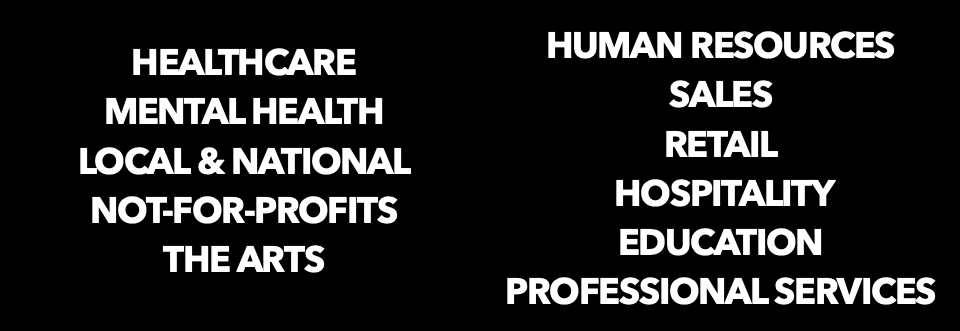
The research employed a mixed-methods approach involving:
Career disruption often leads to financial hardship for women, with significant income reduction and a long recovery period.
"I wasn't eligible for EI and so I was in a panic. Obviously, when you don't have an income and then you have kids…"
"I went from making 6 figures to working for minimum wage at an animal shelter in order to preserve my sanity and self-worth."
Many women turn to entrepreneurship as a survival strategy rather than a desired career path, and importantly, 100% of women interviewed did not refer to themselves as "entrepreneurs."
"I could always sell everything else for everybody else …so, I started my own business.”
"…the truth of that is, you have to have that entrepreneurial spirit, that driving force, and I don't think I had it enough…”
Despite the challenges, some women reported positive outcomes stemming from career disruption, viewing it as an opportunity for growth and change.
“…and then it was just like the big lightbulb, because I don't want to work for companies anymore…. I'm now a consultant….I also started a second business as well."
"Two years later, I am now working in a new career/industry that I love that also has great future potential. I now know that getting reorganized was one of the best things to ever happen to me."
Trust is Fundamental: Building trust with participants was crucial for them to share their stories openly. The community partners' involvement fostered credibility and facilitated access to the target demographic.
Entrepreneurship Programming is Vital: The research highlighted a lack of programming specifically for women aged 40-64 exploring entrepreneurship. The existing focus on younger demographics excludes this demographic.
Collaboration is Key: Collaboration between community organizations is essential to provide comprehensive support and avoid duplication of services.
Strengthen System Connectivity: Establish bi-annual meetings between community organizations to enhance collaboration, information sharing, and program coordination.
Adapt Language and Approach: Move away from solely using "entrepreneur" terminology, recognise the value of experience, and position entrepreneurship as building something meaningful.
Increase Inclusivity in Programming: Develop entrepreneurship programs specifically targeting women aged 40-64, considering their unique needs and experiences.
Facilitate Cross-Generational Mentoring: Create opportunities for mentorship between disrupted women and their younger counterparts, fostering learning and knowledge exchange.
Each woman that was interviewed was invited to produce an artifact—something that for them, represented their journey or their current mindset (scroll on each image to see their own words).

“…really what you're looking at are all of these feelings I describe on paper. That burst you see at the bottom left is my spirit hanging on, existing in the chaos, finding a safe space. THANK YOU Karen, for caring enough to want to dig deeper and change it. Young women in business - especially those working for someone else hear this: make your boundaries clear, say what you need to say, become self-reliant. Know that you need not stay anywhere that you are not respected or appreciated. While money sure makes life easier and more fun, it isn't everything and I wouldn't go back to my previous work life for anything in the world. Not now. I have found where I'm supposed to be. #angrywoman #womeninbusiness #strongwomenunite”

“I’m attaching a photo that I took on the weekend, that kind of sums up my life right now – enjoying my back deck with a drink and good book (this one in particular about a woman who had her life disrupted).”
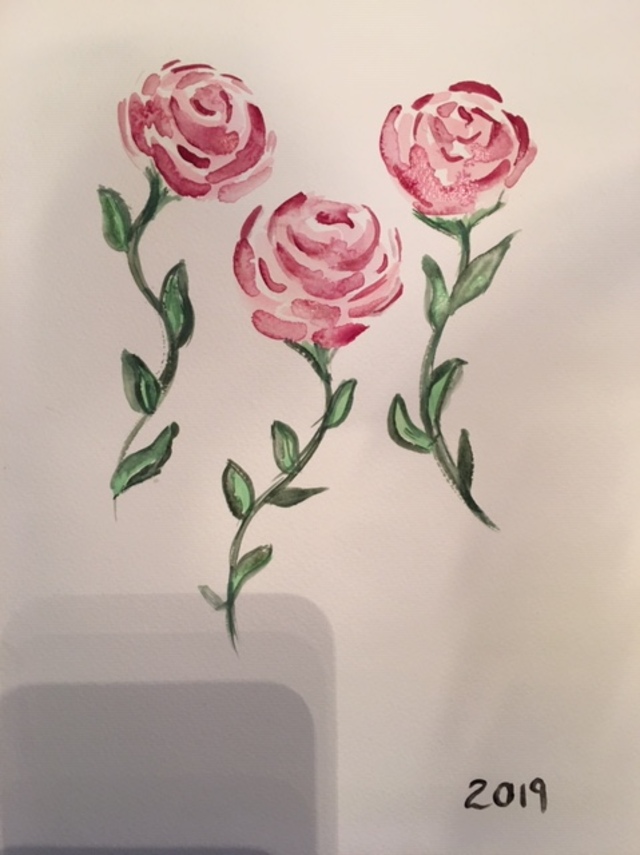
“The artwork is representative of fresh starts. I have been wanting to try watercolour artwork for a while, actually procrastinating because of my own personal reluctance around being able to start something new that I had no idea about. This piece is my actual first attempt to watercolour painting. This is symbolic of those who have had work disruption…that feeling of reluctance, trying something new, and the fear of whether you can actually work again. My disruption really jolted my confidence and my reaction was to just avoid the idea of returning to the workplace. After finishing this artwork, I also noticed I have ‘3’ flowers. Why 3? After googling a numerology site, it appears the number three is symbolic of creativity, good communication and social skills. As well, the number represents a playfulness, self confidence and a trusting of one’s abilities. I believe the ‘3 flowers’ truly is reflective of my current work self and how I now accomplish work.”

Title: Strength-Family
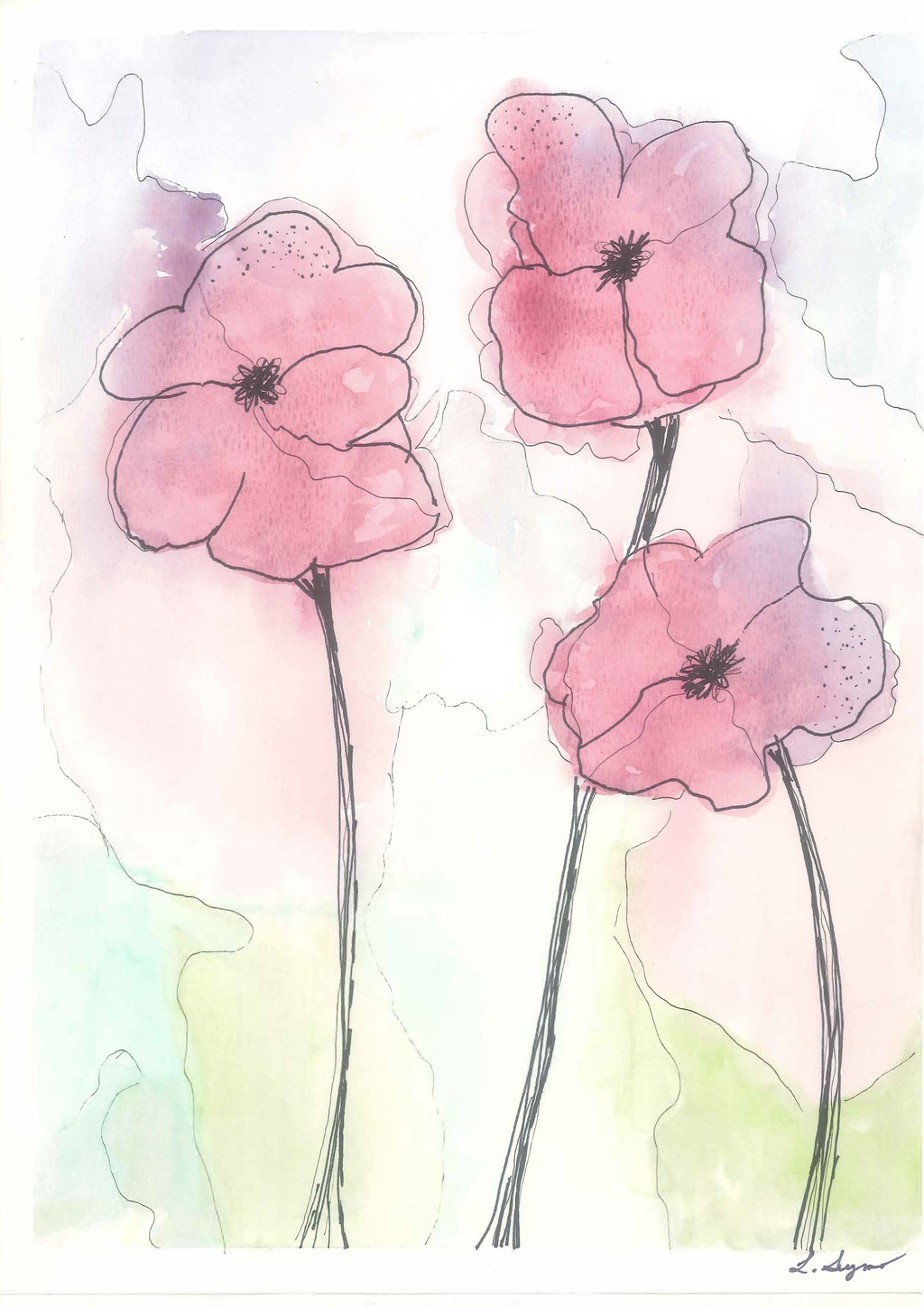
“…this symbolized my past, present and future or the past, present and future versions of me."